Acceptance rate
62%
58%
More selective — 134 of 232 submissions made the program
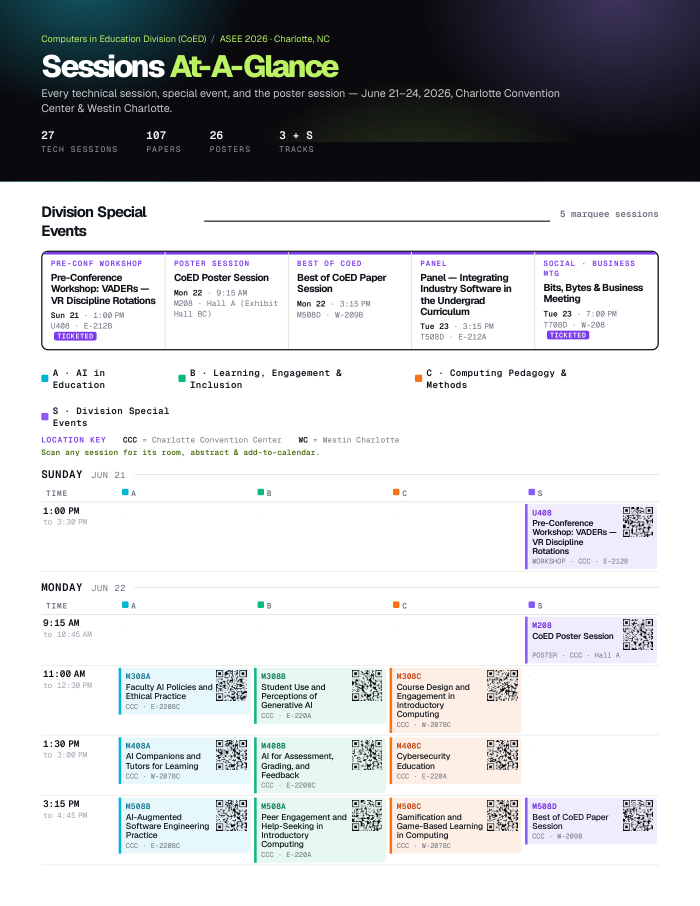
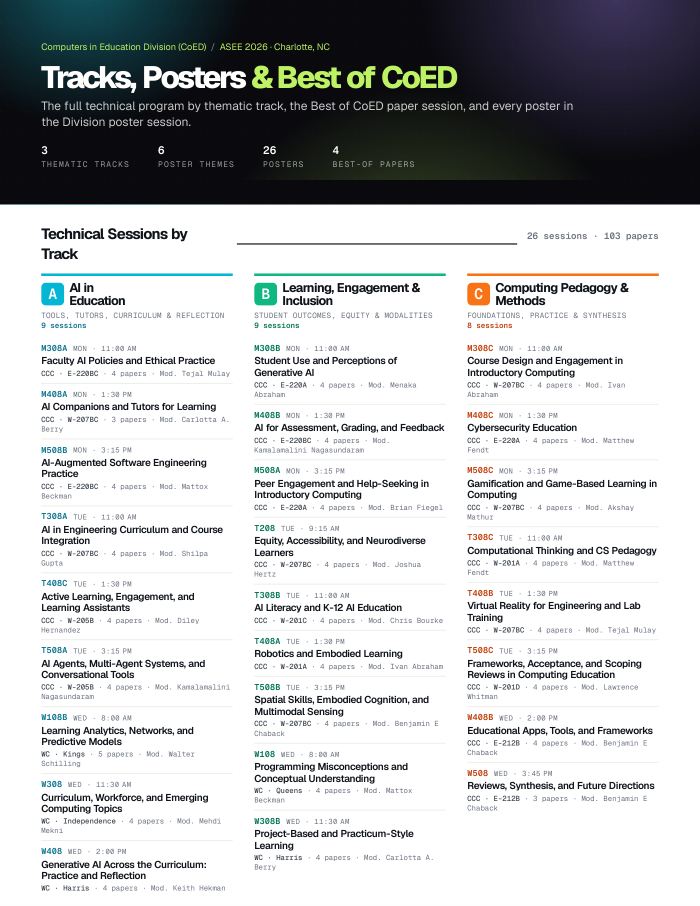
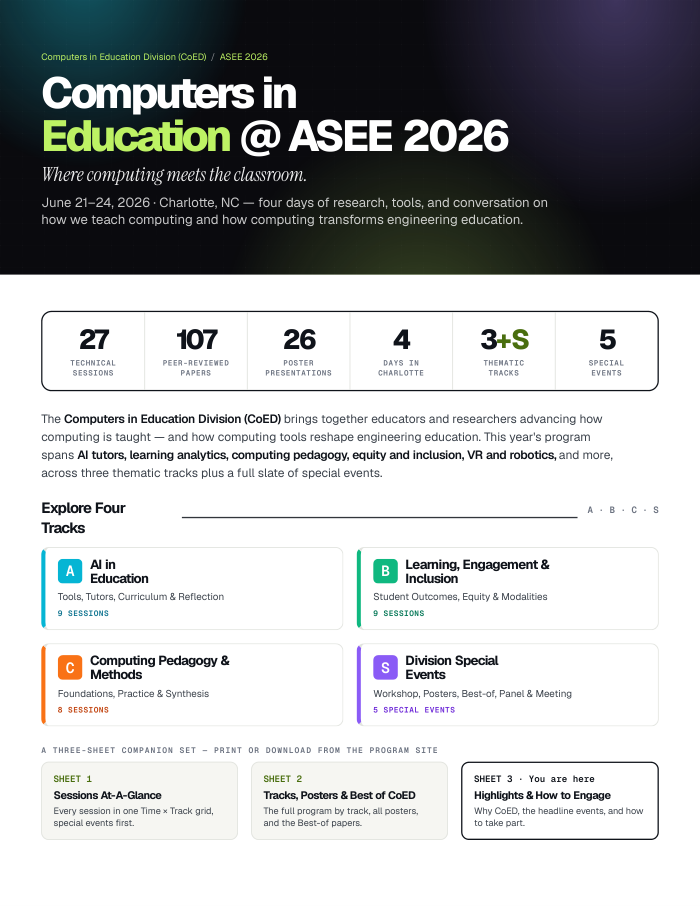
The full program — four days, four tracks, 134 papers, plus a pre-session workshop — built for searching, scanning, and showing up.
Four days of research, practice, and discussion — kicking off with a pre-session workshop on Sunday — at the intersection of computing and engineering education. Find your sessions, claim a moderation slot, or browse the work that shaped each track.
Submissions climbed while the presented program held steady — so earning a spot on the 2026 program was more competitive than last year. At the same time, reviewer effort shifted earlier: abstract review held steady while late-round rewrites dropped sharply, a sign that stronger drafts came in.
Source: CoED @ ASEE 2026 Program & Journal Report.
A quick tour through the program's hidden shape — who's writing with whom, which topics keep showing up, and where the cross-pollination happens. Click any author, topic, or pair to jump into the matching search.
papers per author across all tracks
authors with the most distinct co-authors — the network's hubs
tag size = paper count · color = primary track · click to search
how the most-tagged themes split across the four tracks
duos with more than one paper together this year
how big are the author teams?
affiliations sending moderators & poster judges
themes that surface across multiple tracks — the connective tissue
odds, ends, and outliers worth noticing
No sessions saved yet — open the Schedule, the Tracks view, or the search results and tap the ☆ on any session card to add it here.
Assigned to moderate a session? Find yours below, then print the one-page sheet or present the slide deck. You get everything you need at the lectern — clock times for each paper, titles, authors, room, and direct links to any recording or slides — plus a projector-ready deck: a branded intro with the session schedule, a title slide with a QR for each paper (handy when a talk is pre-recorded and bandwidth is tight), and a closing slide on what's next and the Division business meeting.
Every technical session needs a moderator to keep things on time, manage Q&A, and make presenters feel welcome. It's a small contribution that meaningfully shapes the experience for hundreds of attendees.
Pick any sessions you'd be willing to moderate — multiple selections are encouraged, since they give us flexibility for matching across schedule constraints. We'll confirm assignments by early June.
data/admin.json to add or update emails
The conference is days away and a session still needs a moderator. Moderating takes about 90 minutes — keep talks on time, run Q&A, and welcome the presenters. It's a small lift that makes a big difference.